Modern comfort without compromising historic character
Retrofitting a modern heating system into a listed building requires a careful balance. The system must provide reliable, efficient comfort while respecting the architectural features and historic materials that make the property significant.
For this Grade II-listed Georgian villa in London, Ultra-Fin worked alongside WDRY Architects to develop an effective radiant heating solution that would remain virtually invisible and require minimal intervention to the historic building fabric.
The result demonstrates how modern heating technology can be integrated into a protected property without compromising its original character.
The client’s brief
The restoration required a modern heating system, but protecting the building’s historic integrity was essential.
The property presented several challenges. Its thick exterior walls, original wooden floors, large chimney breasts and limited areas suitable for conventional radiators made a traditional radiator-based system difficult to implement effectively.
The owners considered both large cast-iron radiators and trench heating. However, radiators would have occupied valuable wall space, while trench heating would have required more substantial alterations to the floor structure.
The objective was therefore clear: find a sustainable and cost-effective heating solution that would be discreet, effective and sympathetic to the property.
Why traditional approaches were unsuitable
Trench heating has often been used in listed buildings because it can be concealed within the floor. However, it can involve significant structural work and may require deep trenches or alterations to original timber floor structures.
Overlay underfloor heating systems were also considered unsuitable. These systems would have covered the original wooden floors, increased the finished floor height and potentially introduced vapour-closed materials into a building that relies on natural breathability.
For a historic property, those compromises were difficult to justify.
Ultra-Fin offered a different approach: installing the heating system within the existing floor structure rather than adding a new heating layer above it.
Choosing Ultra-Fin® radiant heating
Ultra-Fin is an in-joist hydronic radiant heating system designed to operate within the floor cavity.
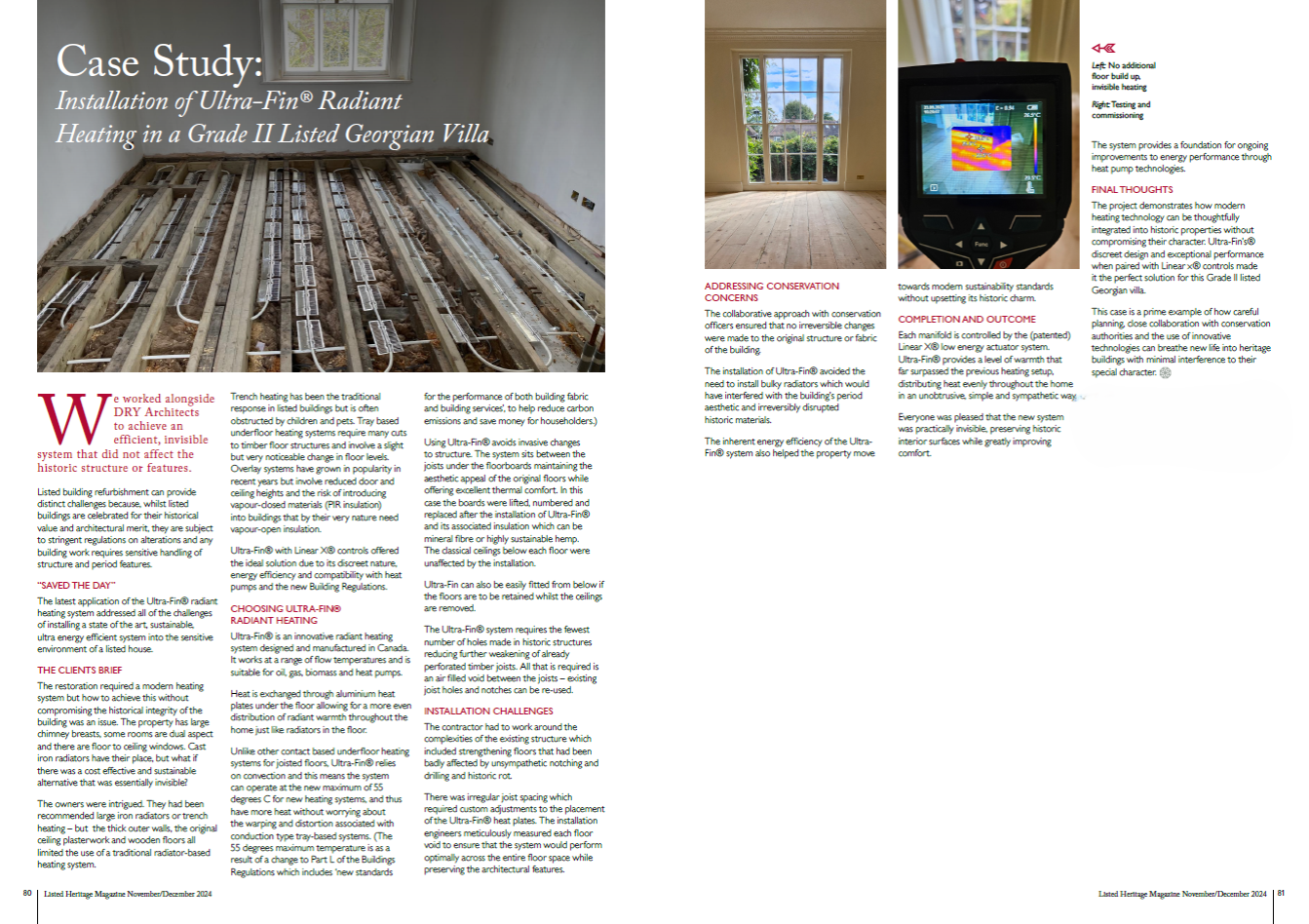
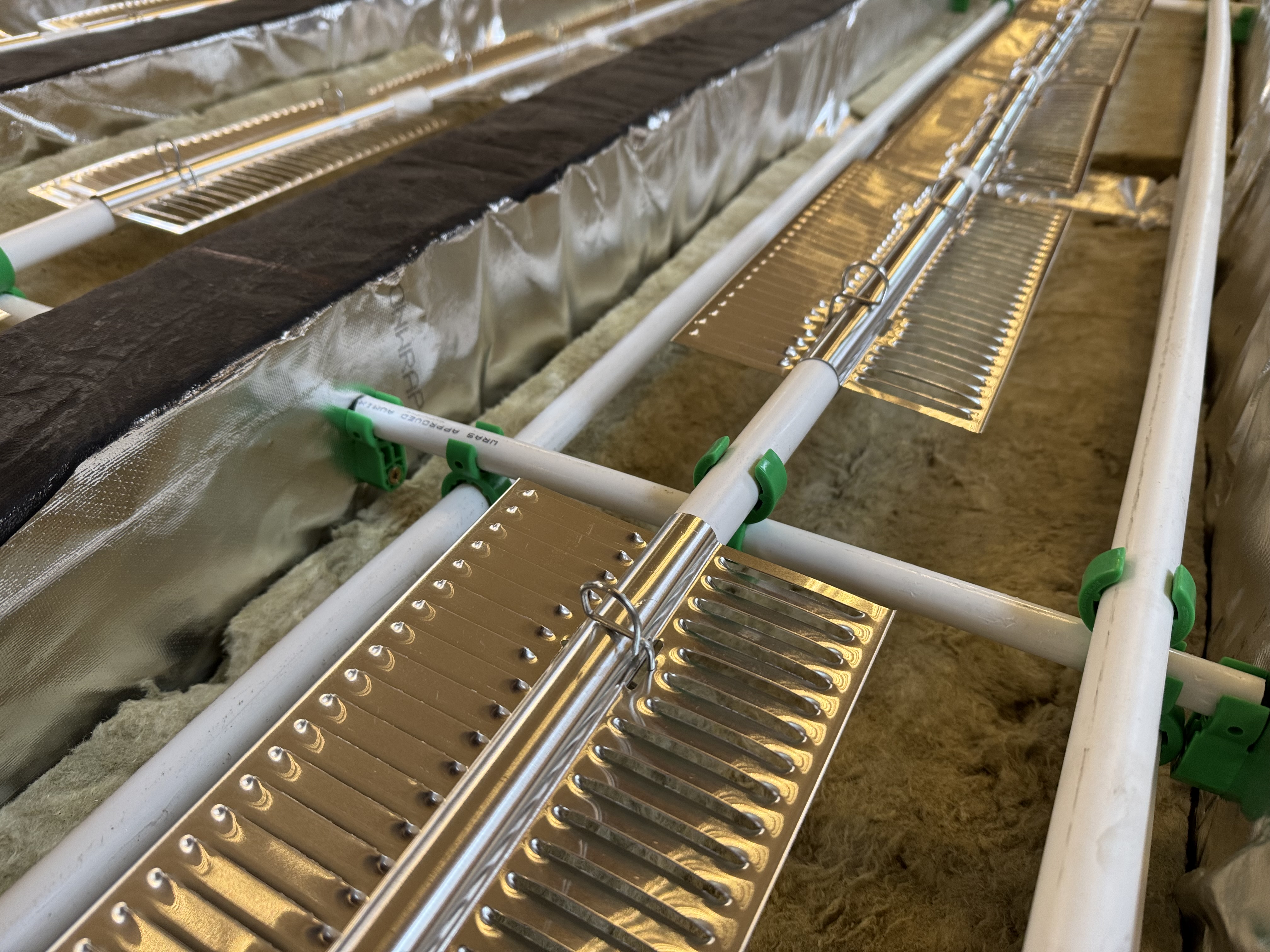
Warm-water tubing and aluminium Ultra-Fin heat emitters are suspended between the joists. The emitters transfer heat into the surrounding air, creating natural convection within the joist cavity while also radiating warmth towards the underside of the floor.
This allows the floor surface to be warmed gently and evenly without concrete, screed, heat-transfer plates or an additional floor build-up.
Ultra-Fin can operate across a range of water temperatures and can be used with boilers, biomass systems and heat pumps. For this project, it provided the flexibility needed to introduce modern heating without redesigning the historic floor structure.
Preserving the original floors and ceilings
One of the principal advantages of Ultra-Fin was its ability to work within the building’s existing construction.
The floorboards were carefully lifted, numbered and stored before installation. After the tubing, Ultra-Fin emitters and insulation were installed, the original boards were returned to their previous positions.
Insulation using natural or mineral-fibre materials—including highly sustainable hemp where appropriate—was fitted beneath the system. This helped direct heat towards the occupied rooms while remaining compatible with the breathable nature of the historic structure.
The classical ceilings beneath the floors remained unaffected.
Ultra-Fin can also be installed from below where floors must remain in place and ceilings are being removed as part of other restoration work. This flexibility makes it particularly useful for listed properties, where access conditions vary from room to room.
Minimal intervention in the historic structure
The Ultra-Fin system requires relatively few holes in historic timber compared with many alternative systems.
Where possible, existing openings and notches were reused. Any additional drilling was carefully planned to reduce intervention and preserve the structural integrity of the original joists.
This principle was central to the project: introduce modern comfort while making the fewest possible changes to the building.
Overcoming installation challenges
Working with an historic structure is rarely straightforward.
Some floor areas had previously been strengthened, while irregular joist spacing and existing notches created additional installation challenges. Instead of relying on a standard layout, the project team measured each floor void individually.
The placement of the tubing and Ultra-Fin emitters was then adjusted to suit the available space. This allowed the system to provide effective heat distribution while working around the building’s existing structural features.
Careful planning and close coordination between the design team, conservation professionals and installers were essential throughout the project.
Addressing conservation requirements
The team worked collaboratively with conservation officers to ensure that the proposed heating system would not cause irreversible changes to the property.
Installing Ultra-Fin within the joist cavities avoided the need for bulky radiators, visible heating equipment or major alterations to the historic interiors.
It also avoided raising the finished floor level—a particularly important consideration around original doors, skirting boards, staircases and other period details.
Because the heating system is concealed beneath the original floors, the architectural appearance of the rooms remains unchanged.
Efficient control with Cross™ Ultra
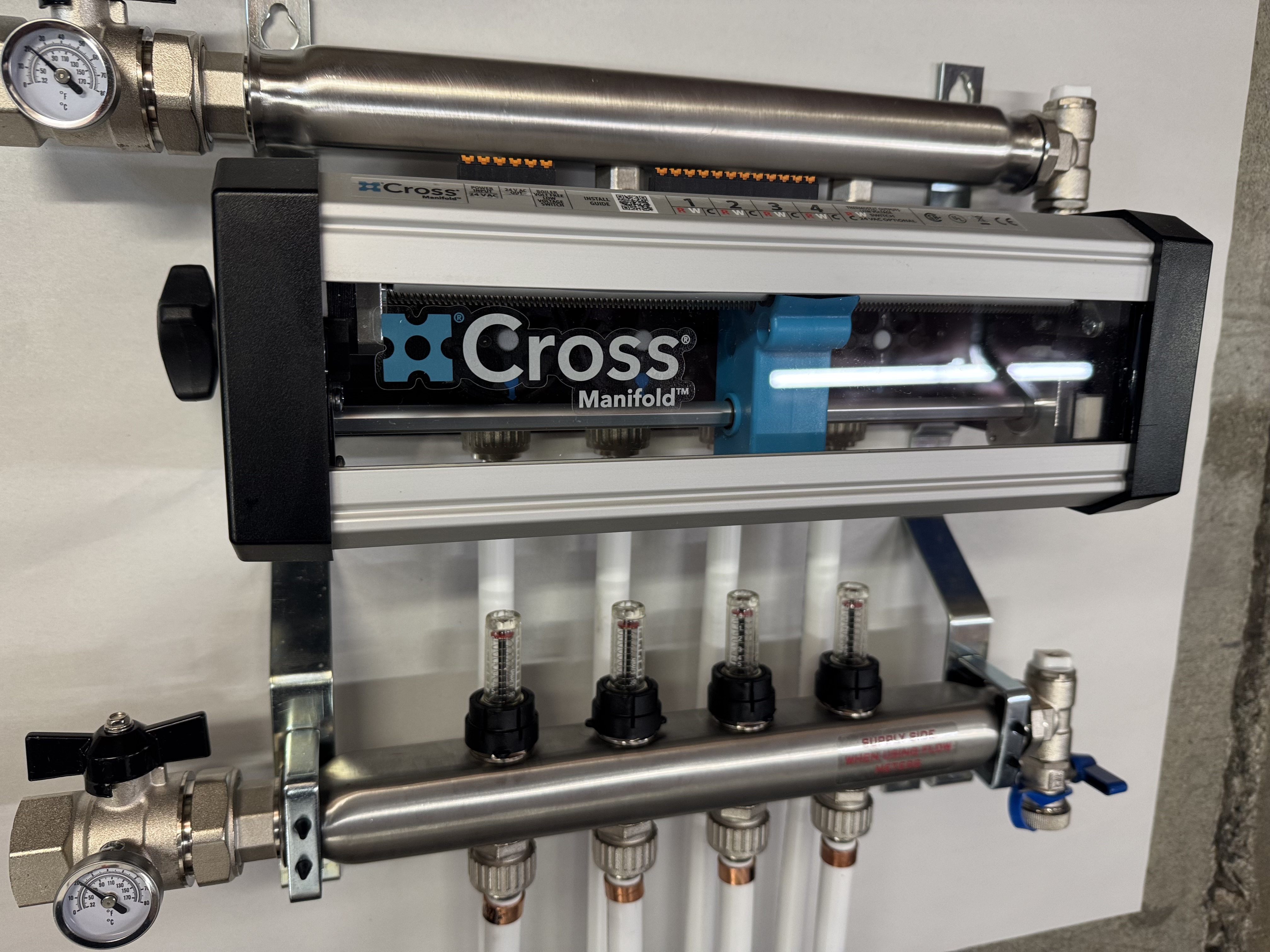
The Ultra-Fin system was paired with Cross™ Ultra controls to provide responsive, energy-efficient room control.
The patented low-energy actuator system regulates the flow of warm water through the heating circuits, helping distribute heat evenly throughout the property.
This combination provides a simple and unobtrusive approach to radiant heating: Ultra-Fin delivers warmth through the floor structure, while Cross™ controls manage the individual heating areas.
Testing and commissioning
Following installation, the system was carefully tested and commissioned.
Thermal imaging was used to confirm that heat was being distributed evenly across the floors. The images demonstrated consistent coverage without the narrow hot strips that can occur with some contact-based underfloor heating systems.
The completed installation provided gentle, even warmth throughout the home while preserving the property’s historic surfaces and architectural features.
Supporting future energy improvements
The installation also provides a foundation for future improvements to the building’s energy performance.
Ultra-Fin’s ability to operate with lower water temperatures makes the system suitable for use with modern heat-source technologies, including heat pumps.
This gives the property greater flexibility as heating technology and sustainability requirements continue to evolve.
A successful outcome for a listed property
The project demonstrates that modern radiant heating can be thoughtfully incorporated into a historic building without sacrificing its architectural character.
By installing the system within the existing joist cavities, Ultra-Fin avoided additional floor build-up, preserved the original floorboards and ceilings, and minimized alterations to the historic structure.
The completed system is discreet, responsive and energy efficient—providing modern comfort while allowing this Grade II-listed Georgian villa to retain the features that define its character.
For owners, architects and conservation professionals, the project provides a practical example of how careful planning, appropriate technology and close collaboration can bring new life and comfort to an important historic building.