
June 21, 2026
Real-World Radiant Heating Performance | Ultra-Fin®
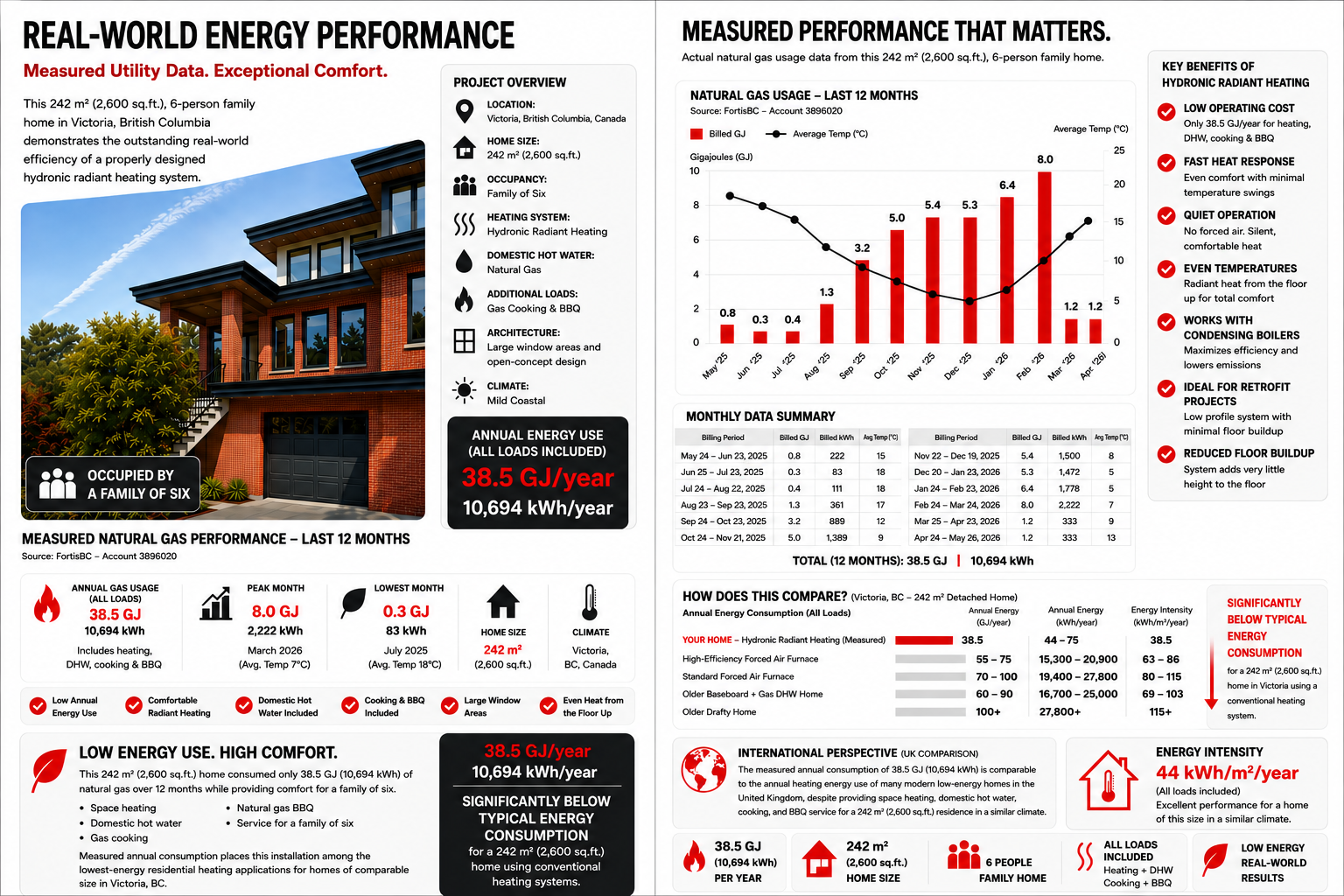
Actual utility data from a 242 m², six-person family home shows just 38.5 GJ of annual natural-gas use—including heating, domestic hot water, cooking and barbecue use.

A comfortable home is about more than simply maintaining a target temperature. The way heat is distributed throughout a space has a major impact on how people experience comfort. Radiant floor heating provides a more natural and consistent approach by warming surfaces and objects in the room rather than relying on forced air circulation.
This case study explores how radiant floor heating improves home comfort by delivering even warmth, reducing temperature fluctuations, and creating a quieter and more efficient living environment.
Traditional heating systems often rely on forced air to move warm air throughout a home. While effective, these systems can create uneven temperatures, drafts, and areas that feel colder than others.
The project required a heating solution that could:
For homeowners seeking a more comfortable environment, the goal was to create a heating system that works naturally with the home's layout while improving overall indoor conditions.
Radiant floor heating offered an ideal solution by distributing heat evenly across the entire floor surface. Instead of heating the air first, the system transfers warmth directly upward into the room, creating a balanced and comfortable environment.
Unlike traditional heating systems, radiant floors provide:
Because the heating system is installed beneath the floor, homeowners can enjoy improved comfort without visible equipment affecting the interior design.
Before installation began, the home was evaluated to determine heat requirements, floor construction, and the most effective system layout.
The installation process included:
Careful planning ensured the system delivered consistent heat while working efficiently with the home's existing or new construction design.
Once the radiant floor heating system was activated, homeowners experienced noticeable improvements in comfort and daily living.
The system provided:
The ability to control different heating zones also allowed homeowners to customize comfort levels in individual rooms while improving energy management.
One of the biggest advantages of radiant floor heating is the way it delivers warmth. By creating a large heated surface area, the system maintains a steady and balanced temperature throughout the room.
This approach reduces the temperature differences commonly found with traditional heating methods, creating a more comfortable environment from morning to night.
Radiant floor heating also works especially well with modern high-efficiency systems because it can operate at lower water temperatures while still providing excellent comfort.
Every home has different heating requirements, but this project reinforced several important principles:
Radiant floor heating offers a smarter way to create comfortable and efficient living spaces. By delivering consistent warmth from the floor upward, it improves comfort while reducing the limitations of traditional heating systems.
For homeowners building a new property or upgrading an existing one, a carefully designed radiant floor heating system provides a reliable solution for achieving quiet, balanced, and energy-efficient home comfort.